Showing posts with label photography. Show all posts

October 27, 2011

Facile : an exceptional encounter between Paul Eluard and Man Ray

Facile is one of those books that mark time and which go through decades. Outcome of the collaboration between Paul Éluard and Man Ray, under the aegis of the surrealist publisher Guy Lévis-Mano, the book gives 12 poems accompanied by 12 heliogravures centered on the figure of Nusch Éluard, muse and wife of the poet. The harmonic resonance that surfaces from these pages builds an eroticism that has lost none of his poetic and visual enchantment.


 Currently, the librairie Loliée offers :
  • [MAN RAY] - ÉLUARD (Paul). Facile. Paris, G.L.M., 1935. small in-4° in leaves, illustrated cover. First edition of 12 poems by Paul Éluard illustrated in text with 12 heliogravures by Man Ray of Nusch Éluard's body. Limited to 1 225 copies. One of the 1 200 copies on velum paper.

September 29, 2011

John Lennon & Yoko Ono : He Stands in a Desert Counting the Seconds of His Life


This frame is from the Jonas Mekas film He Stands in a Desert Counting the Seconds of His Life (1965/1986) presented in 1986 at the Berlin Film Festival. Experimental work, it is composed of 100 vignettes that do not last more than 2 minutes. The couple John Lennon and Yoko Ono pray before the lens of a Polaroid. The picture was sent to the artist and gallerist George Maciunas, Lithuanian-born as Mekas, to beg him to come to their party. At the time Maciunas, principal founder of the Fluxus movement, was working  with the former Beatles and his partner.

Currently, the librairie Loliée offers : 
  • [FLUXUS] Lennon (John) et Ono(Yoko). Original frame from the movie  He Stands in a Desert Counting the Seconds of His Life de Jonas Mekas. Edited in the 80's, 20 x 25.5 cm. Descriptive tag on the back.

June 09, 2011

Erotoscope : 3 models, 26568 combinations to try!

In 1970 Marie Concorde Publisher released an amusing book  : Erotoscope. Designed by Raymond Abigeo and Jean-Claude Peretz (the latter is also known for his involvement in another curiosa photographic book, Mademoiselle 1+1 which recounts the day of a  nymphet in Camargue), the book proposes to dress and undress, according to one's fancy, three models by a sytem of pages divided in four horizontal bands. The book is of the most refreshing and immerses us in the fashion of that day : metallic dresses like ones designed by Paco Rabanne, black large belts falling on hips, crew socks. A book, literally, to strip.


Currently, the librairie Loliée offers :
  • [CURIOSA] ABIGEO (Raymond) -  PERETZ (Jean-Claude). Erotoscope. Paris, Marie Concorde Editeur, 1970, in-4, reliure spiral binding, hard illustrated cover. First edition. 

May 19, 2011

Claude Cahun : distance and metamorphosis

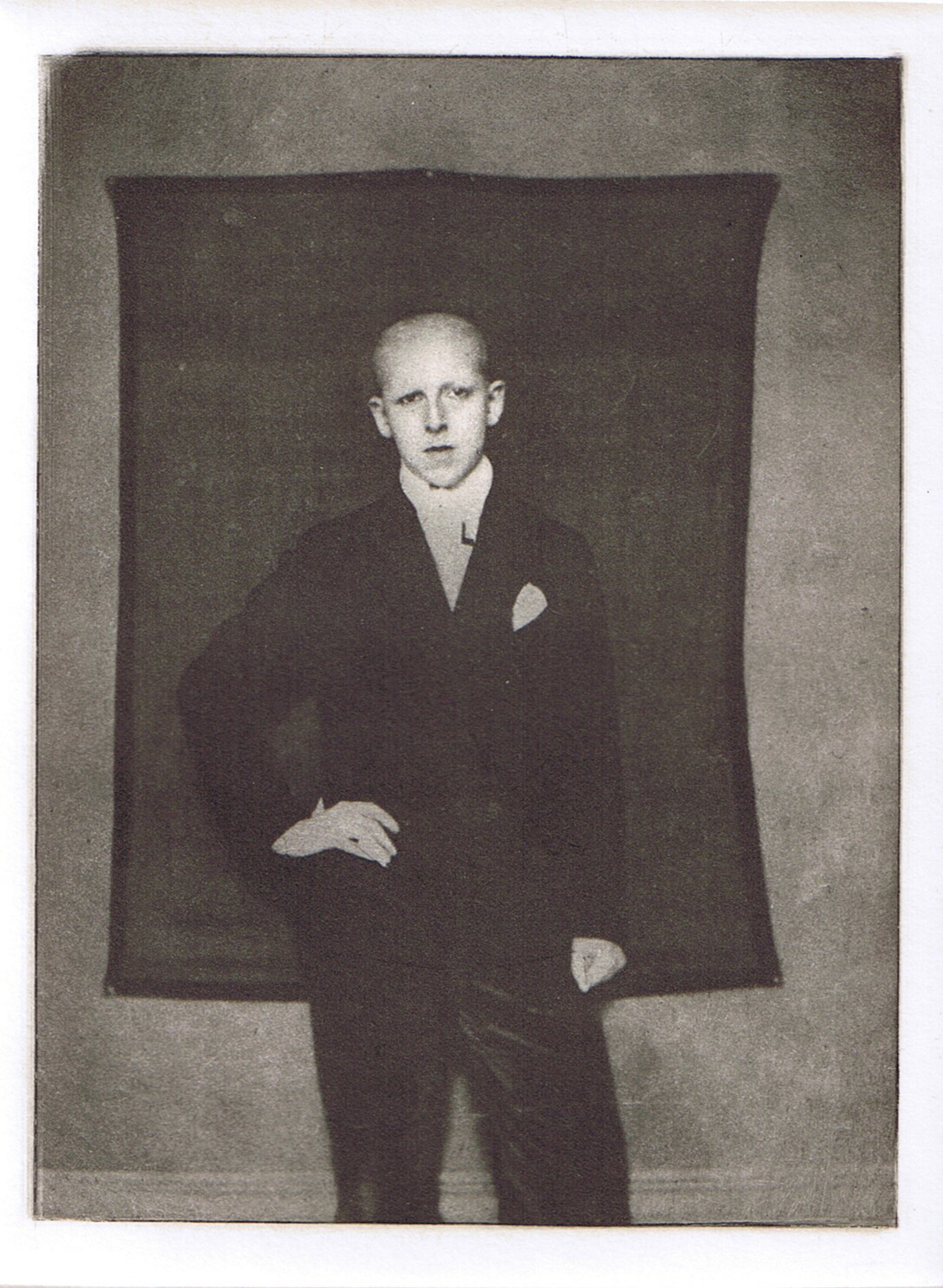
Claude Cahun, born Lucie Schowb (1894-1954) was an artist and photograph developing a queer approach. Friend with the Surrealists, she worked on numerous photomontages but was less known for her photographic self-portraits in which she developed an androgynous representation of the female body. 
Without a doubt, it is her self-portraits that have aroused the greatest interest among theoreticians of contemporary culture. Here the artist uses her own image to expose, one by one, the clichés of feminine and masculine identity. Claude Cahun (née Lucy Renée Mathilde Schwob) reinvented herself through photography (just as she did in her writing), posing for the lens with an acute sense of “performance,” whether dressed as a woman or as a man, with her hair short, long or shaven (which was extremely incongruous for women at this time). However, to speak of identity is also to speak, indirectly, of the body, and by the same token of the self-image that one projects and that becomes social as soon as it is shared. Unlike other artists – mainly men – who made portraits but never or very rarely exposed their own person to the lens (Man Ray, Hans Bellmer, André Kertész), Claude Cahun was at once the object and the subject of her artistic experiments. This is borne out by the care with which she chose her poses and expressions, the backgrounds she used (fabric, bedspreads, sheets, hangings), and her use of specific props (masks, capes, overgarments, glass balls, etc.) – even if the real focus of the image was still the face.
- in press pack of the exhibition  at the Jeu de Paume from 24  may to 25 september 2011.

En 1992, François Leperlier published a bibliographic essay named  "Distance and metamorphosis". Three heliographic and aquatinted engravings  go with  the 66 first copies of this first edition, and one can see the  enigmatic and poetic nature of the artist : 


Currently, the librairie Loliée offers : 
  • Leperlier (François). Claude Cahun. L'Ecart et la métomorphose. Essai. Paris, Jean-Michel Place, 1992, in-8, illustrated covers. First edition. Limited to 2000 copies, one of the 66 first with 3 heliographic and aquatinted engravings.

October 28, 2010

New York by Arrabal

In 1973, Balland Editions published a photography book in which Arrabal provided some snapshots from a trip to New York. The result : 55 pictures with comments by the artist and a travelog by way of introduction. Quote :
Allen Ginsberg calls me out in the street. After ten years without getting in touch, I hardly recognize him. He takes me to his apartment on the 11th Street, in the poorest sector of the Puerto Rican neighborhood. Tea boils in a dented pan and he serves it in glasses which aspire to become coffee's ashtrays. He tells me about his trip to India and corpses that are cremated near the Ganges. When we go out into the street children shout : "Es el profeta!"
God became crazy and thought he was a motobike and then he created man in his image

What? Beckett himself around the corner ! Yes, New York is marvellous !

Currently, the librairie Loliée offers :
  • Arrabal. Le New York d’Arrabal. Paris, Balland, 1973, quadrate in-8, illustrated cover. First Edition with 55 black and white reproductions of Arrabal's pictures, each commented.
  • Arrabal. Les Arrabeaux d’Avignon. Caprices Cannibales. Avignon, Médiathèque Ceccano, 1994, in-16, covers. First edition with 3 original poems by Arrabal. Catalogue published for a Arrabal's exhibition in the city of Avignon.

May 14, 2009

The poetic look of Germaine Krull

Close to Surrealism, associated with the Bauhaus and member of the "new photography" - movement launched by Laszlo Moholy-Nagy, Germaine Krull (1897-1985) favours the graphic and poetic diversion over formalism. The modernity of her subjects (metal architecture, industrial design) earned her the nickname of the "Iron Valkyrie." Her famous shots of the Eiffel tower pushed the photographic conventions of the time. Assertive woman, Germaine Krull fled the envaded France for the United States and, then, joined Brazzaville where she headed the photography department of the Free French Forces. She was the first woman to become a war correspondent (Germany, Italy, Indochina). In 1967, André Malraux, then Minister of Culture, organized the first retrospective of her work at the French Film Library, at the Palais de Chaillot.
(sources : encyclopedia universalis, wikipedia).

Currently, the librairie Loliée offers :
  • Krull (Germaine) – Nerval(Gérard de). Le Valois. Paris, Firmin-Didot, 1930, tall quarto, cover printed in red. First edition illustrated with 48 photographic reproductions of Germaine Krull. Limited to 1000 copies.

March 05, 2009

Quiet Days in Clichy with Henry Miller

Quiet Days in Clichy, published in 1956, is a promenade in the heart of Parisian nights during the Roaring Twenties. In this autobiographical novel, Henry Miller recounts his life with his roommate Carl and refers to his women's conquests. One can recognize, in this story, the tone of the author, between modesty of feelings and raw language, which earned him to provoke huge critics. The good contrast of Brassaï's photographs which illustrate the first edition, perfectly echo with the world of Miller.
The story was twice adapted in films : in 1970, under the direction of the artist Jens Jørgen Thorsen, who leans on the text to refer to the sexual freedom of the post-68 years, and in 1990 by Claude Chabrol who focuses on the autobiographical dimension.

"I had no particular desire to go anywhere. I strolled over to the Etoile, which was only a few blocks away, and then instinctively headed down the Champs-Elysées in the direction of the Tuileries, thinking to stop somewhere along the line and have a black coffee. I felt mellow, expansive and at peace with the world."
Henri Miller - extrait de Quiet days in Clichy.


Currently, the librairie Loliée offers :
  • Miller (Henri). Quiet Days In Clichy. Photographs by Brassaï. Paris, The Olympia Press, 1956, in-12. First edition.

January 14, 2009

Lucien Clergue - New York stripes


Lucien Clergue - Zébrées
5 original photographs taken in New York in 1998

Currently, the librairie Loliée offers :
  • Clergue (Lucien). Zébrées. Poèmes et photographies par Lucien Clergue. S.l., Le Renard Pâle, collection « Art en Mécénie », 2006, plexiglas case. First edition with 5 original photographs Limited to 28 copies on Rives paper numebred and signed by the artist.

April 30, 2008

White Manifesto by Lucio Fontana

White Manifesto : spazialismo (quotes)

"we are continuing the evolution of art"
  • "The discovery of new physical forces, the mastery of matter and space gradually impose on man conditions which have never existed heretofore in history. The application of these discoveries to all the forms of life produces a modification in the nature of man."
  • "We are living in the era of mechanics. Already painted and the plaster figure no longer make sense."
  • "We are abandoning the use of known forms of art nd we are initiating the development of an art based on the unity of time and space. "
  • "Matter, color and sound in motion are the phenomena whose simultaneous development is an integral part of the new art."
  • "The new art demands the functioning of all the energies of man in creation and interpretation. The Being manifests itself integrally, with the plenitude of its vitality."

In 1966, the Apollinaire gallery in Milan republishes - translated into Italian, french, English and German - the founder text of Lucio Fontana. Printed at 2000 copies, enriched with photographic reproductions by Ugo Mulas and texts relating to the work of Fontana, the book is taking place in a period where the influence of Italian painter reaches its full dimension. The Apollinaire gallery is the cradle of New Realism, whose term itself comes from a manifesto written by Pierre Restany as part of an exhibition. Yves Klein, in 1961, sets his monochromes to the same gallery. This art movement that uses garbage, torn posters, found objects, which gives media coverage to creation can be read as an neo-dada interpretation of the new art claimed by Fontana.

Currently, the librairie Loliée offers :
  • Fontana (Lucio). Manifiesto Blanco. Spazialismo. Milan, Galleria Apollinaire, 1966, in-folio, broché, case. Facsimile of the original manifesto published in 1946 in Buenos Aires and translated into Italian, French, English and allemand. Limited edition to 2000 copies and enriched with photographic reproductions by Ugo Mulas and texts relating to the work of Fontana.

March 12, 2008

Doisneau - Renault - 1988


On the occasion of an exhibition of photographs by Robert Doisneau (November 16, 1988 - January 22, 1989) was published a catalogue distinctive by its format in-12 and its unique and large case formed by two Renault red iron plates collated by five bolts. The diamond-shaped symbol of the French car company is laid on each plate with the name of the photographer. With the reproduced photographs now cults is proposed an interview in which Doisneau recalls those pictures : "Renault was for me the true beginning of my career as a photographer and the end of my youth".


Currently, the librairie Loliée offers :

  • Doisneau (Robert). Renault. Paris, Hazan, 1988, in-12. Folder of red iron with a logo reproducing the one of Renault but mentioning the name of the photographer. Text and pictures by Robert Doisneau.