August 03, 2011

Annual Closing

Dear readers,
The bookshop will be closed from August, 04 to August, 29.
July 27, 2011

The Approximate Man of TristanTzara

Published in 1931, L'Homme Approximatif (The Approximate Man) is a pivotal text in the work of Tristan Tzara. Written between 1925 and 1930, this poem is at the crossroads of the revolutionary Dadaist period and the Surrealist growth. One can find in this work, without punctuation or capitalization, the struggle of the author : a desire to reclaim the language to better fight a civilization that restricts men, prevents them to overtake theirs limits. The man he described is approximate in the way that he is thrown at random in the world, inaccessible to himself as to others, uncertain of the meaning of his life, yet passionate.The goal of the poem is to imagine a new man who lets intuition and spontaneity guide him through life.
je parle de qui parle qui parle je suis seul
je ne suis qu'un petit bruit j'ai plusieurs bruit en moi
un bruit glacé froissé au carrefour jeté sur le trottoir humide
aux pieds des hommes pressés courant avec leur morts autour de la mort qui étend ses bras
sur le cadran de l'heure seule vivante au soleil
Currently, la librairie Loliée offers : 
  • Tzara (Tristan). L'Homme approximatif. Paris, Editions Fourcade, 1931, in-8, Bradel binding, plats, original covers. First edition. Limited to 510 copies, this one on  "vélin bibliophile".

July 07, 2011

Jules Supervielle : a quiet strenght

Jules Supervielle (1884-1960), raised between France and Uruguay, is a man between the two worlds, both in his life and in his work. Contemporary of the Surrealists, he does not adhere to the movement, rejecting the too much emphasis given to unconscious writing. His poetry iwants to be humanist, in a simple and transparent way, and mixes everiday life with a marvellous aprehension of scenery.  Childhood and death are two recurring themes of his work (he lost his parents in a tragic accident while he was still a baby). His early writings are influenced by a Larbaud or Laforgue. He develops a quiet lyricism that addresses the great mysteries of the universe with humility. Poetry, stories, theater : his work breaks with conventional models while maintaining a commitment to accuracy and delicacy in his use of language.

Currently, the librairie Loliée offers :
  • Les poèmes de l'humour triste. Ornés de dessins inédits par Messieurs André Favory, André Lhote et Dunoyer de Segonzac. Paris, la Belle Edition, 1919, tall in-8. First edition with original illustrations. Limited to 315, this one on Arches paper. 
  • Le Survivant. Paris, Gallimard, 1928, in-4 tellière. First edition. One of the 110 copies in-quatro tellière. 
  • Boire à la source. Confidences de la mémoire et du paysage. Paris, Editions Corréâ, 1933, in-12. First edition.
  • L'Arche de Noé. Paris, Gallimard, 1938. Press copy with a dedication to the French writer Yves Gandon.
  • Oublieuse Mémoire. Paris, Gallimard, collection "Métamorphoses", 1949, in-12, broché. Edition originale. Mention fictive d'édition. 
  • Shéhérazade. Comédie en trois actes. Paris, Gallimard, 1949, in-12. Editin originale. Un des 8 premiers exemplaires sur Hollande. 
  • Premiers Pas de l'Univers. Contes. Paris, Gallimard, 1950, in-12. First edition. One of the 15 first copies on Holland paper.
  • Le Voleur d'enfants. Comédie en trois actes et un épilogue. Paris, Gallimard, 1949, in-12. First edition. One of the first 8 copies on Holland paper.  

July 01, 2011

Eccentric Sensoriality : last book of the Dadaist Raoul Hausmann

Founder of the Dada movement in Berlin, Raoul Hausmann (1886-1971), born in Vienna, is one of the first signatories of the Manifesto. His art, described as degenerate by the Nazis - he then left Germany to settle in France, is first experimental. Hausmann builds a poetry made up of sounds and onomatopoeia that he theorizes in the text "Optophonetics" (published in the journal "MA" in 1922). He has been the first to practice the art of collage, combining texts, fragments taken in the press, drawings and photographs. Based in Limoges in 1944, Hausmann will remain there till his last days .
Published in 1970 in a bilingual edition, Eccentric Sensoriality  is the last book written by Hausmann. It presents two major texts : the reprint of "Optophonetics" and therefore "Sensoriality eccentric" an essay in which the Dadaist has a pessimistic view of the modern civilization. He attacks the Homo sapiens who invented the capitalist dictatorship and limited knowledge to a purely materialistic level . Violent critique of progress, this utopic work hopes for the advent of a new man with an "eccentric sensoriality", a mental energy transcending the limits of the body and mind.
The book is illustrated by Jefim Golyscheff (1897-1970), Ukrainian painter and composer based in Berlin in 1909. Friend of Raoul Hausmann from the very beginning of Dada, he will take his distance from the movement in 1922 to get closer to the Bauhaus. Forced to flee the Nazi Germany, he moves to Spain and Brazil. He comes back in France in the 60's.


Currently, the librairie Loliée offers : 
  • [GOLYSCHEFF (Jefim)] – HAUSMANN (Raoul). Sensorialité excentrique 1968.69 précédée de  Optophonétique 1922. Cambridge, Blackmoor Head Press, collection « OU » 1970, in-4 in leaves, red illustrated folder, black case noir with, on the first cover, a collage made with a photographic portrait of the author, the name of the author and the number of the book.  First edition. Bilingual text. English version translated by Jean Chopin. Limited to 440 copies, one of the first 40 copies on « Hayle » paper signed by the author and with 2 original silkscreens numbered and signed by Jef Golyscheff.

June 23, 2011

The controversy Sexus, first novel of the famous Henry Miller's trilogy

"The Rosy Crucifixion" is the second trilogy of Henry Miller (1891-1980), writer who became a controversial symbol of the Beat Generation. It took more than a decade for Miller to complete this collection began in 1949 with Sexus that delivers the details of his divorce from his first wife to his second marriage with June Miller. The story takes place in New York. The book is full of portraits, memories and offers an insight into Miller's ambition who struggled to become a writer. As usual, Miller exposes erotic passages to establish his thoughts. The french publication was turbulent. The editor, Maurice Girodias, head of Olympia Press publications founded by his father who had taken the risk to publish Tropic of Cancer in 1934, created the Editions de la Terre de Feu in the sole purpose of publishing the translation of Sexus. The novel suffers censorship and falls under the 1881 law, extended in 1945, to foreign works  "cataloged libertine." Girodias is threatened to be jailed. The first edition of the french translation, published in 5000 copies, was cut of its pornographic passages. Only the 200 not-to-be-sold copies and the 300 copies reserved for press remained uncensored.

Currently, the librairie Loliée offers :

  • MILLER (Henry). La Crucifixion en rose. Sexus. Livre premier. Traduit de l'anglais par Jean-Claude Lefaure. Paris, Editions de La Terre de Feu, 1949, 2 volumes, in-12, covers. First edition of the french translation. One of 300 copies reserved for press.  


    June 09, 2011

    Erotoscope : 3 models, 26568 combinations to try!

    In 1970 Marie Concorde Publisher released an amusing book  : Erotoscope. Designed by Raymond Abigeo and Jean-Claude Peretz (the latter is also known for his involvement in another curiosa photographic book, Mademoiselle 1+1 which recounts the day of a  nymphet in Camargue), the book proposes to dress and undress, according to one's fancy, three models by a sytem of pages divided in four horizontal bands. The book is of the most refreshing and immerses us in the fashion of that day : metallic dresses like ones designed by Paco Rabanne, black large belts falling on hips, crew socks. A book, literally, to strip.


    Currently, the librairie Loliée offers :
    • [CURIOSA] ABIGEO (Raymond) -  PERETZ (Jean-Claude). Erotoscope. Paris, Marie Concorde Editeur, 1970, in-4, reliure spiral binding, hard illustrated cover. First edition. 

    June 01, 2011

    Suzanne Roger : a neglected figure of contemporary art

    Married to André Beaudin, Suzanne Roger (1896-1986) remains still today in the shadow of her contemporaries.Yet, her career deserves that one stops on her work. Trained at the Academie Ranson, by Maurice Denis and Paul Serusier, she made her first exhibition at the Kahnweiler gallery. She met the German collector and dealer via Juan Gris and Max Jacob and became, with her husband, a regular member of les Dimanches de Boulogne, where she met painters and poets Henry Kahnweiler supported. The brotherhood and literary  atmosphere of those meetings reflects in the painter's work whose pictorial quest is linked to the literary movement of the time. Her style is based on clean lines that are filled and deconstructed by flat areas of color. In 1961, is published byt the Galerie Louise Leiris (formerly, the one  of her stepfather Kahnweiler), the poems collection S.O.S. of the Haitian painter Roland Dorcely. The 5 engravings on copper by Suzanne Roger that illustrate the book provide a glimpse of her talent.

    Currently, the librairie Loliée offers :
    • [Roger (Suzanne)] - Dorcely (Roland). S.O.S. Paris, Galerie Louise Leiris, 1961, in-4, in leaves, illustrated cover, publisher's case. First edition with 5 original engravings, 2 in colors, by Suzanne Roger. Limited to 112 coppies. One of the 90 copies on Rives paper signed by the author and the artist.

    May 27, 2011

    Le Voeu d'une morte : an Emile Zola's novel wrote in his youth

    Zola in 1865
    In 1899 Emile Zola agreed to reprint with his usual publisher Charpentier an early work, Le Voeu d'une morte (The Vow of a dead woman). First released in serial in Le Figaro Villemessant in September 1866, this novel was published for the first time, the same year, by Achille Faure. The plot moves forward on a misunderstanding : Daniel Raimbault receives from his dying benefactress, Blanche de Rionne, the task to watch over the daughter of the latter, Jeanne. She becomes an adult, gets married. Then widow, Jeanne receives anonymous and passionate letters secretly sent by Daniel. Jeanne believes the letters are from a mutual friend, George (you can read the entire novel in french here). Success is not at the rendezvous. It must be said that this was a commissioned work that the author accepted just to do some cash. He wrote in 1889 about the reprint by Charpentier :
    I decided to make it public, not for its merit, certainly, but for the interesting comparison the literature wonderers may be tempted to do one day, between these first few pages and those that I wrote later. 
    To the novel, Zola added an appendix of four short-stories, Esquisses parisiennes (Parisian sketches). The amusing "Les Repoussoirs" recounts the adventures of Durandeau a owner-manager whose business is to trade ugliness. Thus, he provides, for a walk, services of foils whom, by contrast, enhances the client's physical (full text, in french, here).

    Currently, the librairie Loliée offers :
    • Le Vœu d’une morte. Paris, Achille Faure, 1866, in-12, binding by Champs. First edition, no deluxe paper [Carteret, II, 490].
    •  Le Vœu d’une morte. Paris, Charpentier, 1889, in-12, vellum binding from that time. Second edition. One of the 100 copies on Holland paper, only deluxe paper. Ex-libris : Alidor Delzant, executor of  the Goncourt brothers.  

    May 19, 2011

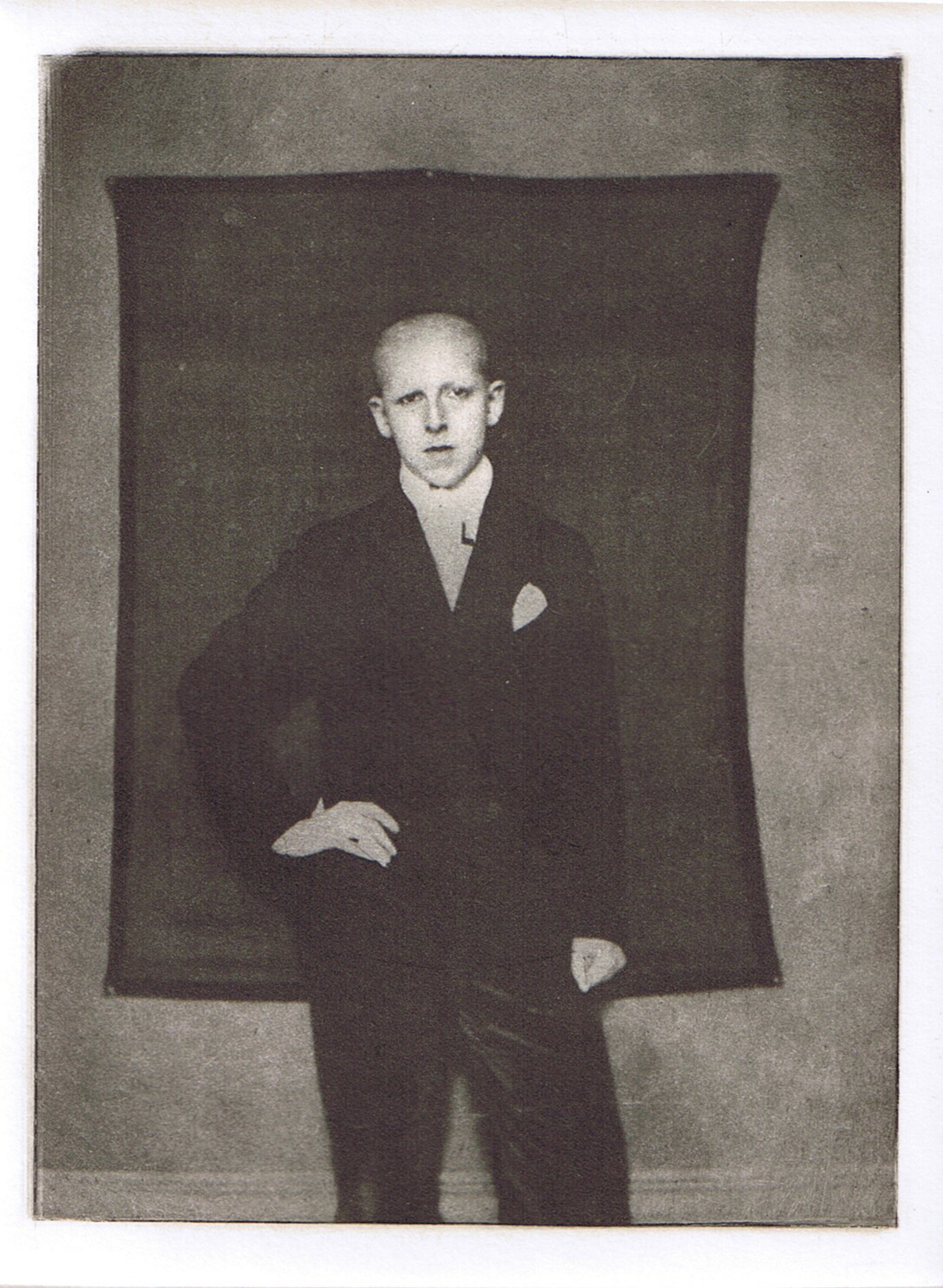
    Claude Cahun : distance and metamorphosis

    Claude Cahun, born Lucie Schowb (1894-1954) was an artist and photograph developing a queer approach. Friend with the Surrealists, she worked on numerous photomontages but was less known for her photographic self-portraits in which she developed an androgynous representation of the female body. 
    Without a doubt, it is her self-portraits that have aroused the greatest interest among theoreticians of contemporary culture. Here the artist uses her own image to expose, one by one, the clichés of feminine and masculine identity. Claude Cahun (née Lucy Renée Mathilde Schwob) reinvented herself through photography (just as she did in her writing), posing for the lens with an acute sense of “performance,” whether dressed as a woman or as a man, with her hair short, long or shaven (which was extremely incongruous for women at this time). However, to speak of identity is also to speak, indirectly, of the body, and by the same token of the self-image that one projects and that becomes social as soon as it is shared. Unlike other artists – mainly men – who made portraits but never or very rarely exposed their own person to the lens (Man Ray, Hans Bellmer, André Kertész), Claude Cahun was at once the object and the subject of her artistic experiments. This is borne out by the care with which she chose her poses and expressions, the backgrounds she used (fabric, bedspreads, sheets, hangings), and her use of specific props (masks, capes, overgarments, glass balls, etc.) – even if the real focus of the image was still the face.
    - in press pack of the exhibition  at the Jeu de Paume from 24  may to 25 september 2011.

    En 1992, François Leperlier published a bibliographic essay named  "Distance and metamorphosis". Three heliographic and aquatinted engravings  go with  the 66 first copies of this first edition, and one can see the  enigmatic and poetic nature of the artist : 


    Currently, the librairie Loliée offers : 
    • Leperlier (François). Claude Cahun. L'Ecart et la métomorphose. Essai. Paris, Jean-Michel Place, 1992, in-8, illustrated covers. First edition. Limited to 2000 copies, one of the 66 first with 3 heliographic and aquatinted engravings.

    May 12, 2011

    When Eugène Dabit describes the false bourgeoisie

    India Ink drawing
    Eugène Dabit (1898-1936) is best known for his novel Hotel du Nord, published in 1929 and immortalized in the 1938 film  by Marcel Carné. Autodidact, Dabit befriended writers of the time, GionoMartin du Gard and Gide. He shares with Céline, met in 1933, the experience of misery, the one of the 1914  trenches, the one of suburbs. The work of this proletarian writer is sometimes populist, also tinted with a naturalistic despair. Villa Oasis ou les faux bourgeois, published in 1932, presents the story of Helen, a woman who moves in with her mother that she does not known. The mother lives with a former worker who became a wealthy hotelier. Dabit portrays these "new rich", their hopes and their downfall.


    handwritten page
    Currently, the librairie loliée offers : 

    • DABIT (Eugène). Villa Oasis ou les faux bourgeois. Paris, N.R.F., 1932, in-8, Bradel Brael binding, original covers (Asper, Genève). First edition. Limited to 331 copies, one of the 109 printed in-4 tellière on Lafuma-Navarre paper. Copy with a dedication, a India Ink drawing and a handwritten page.

    May 05, 2011

    Vrille : Taking a surrealistic pulse after the Second World War

    Surrealist magazine published at the end of World War II, Vrille is a only one number revue. As explained in the introduction "alibi", the purpose of this magazine, directed by Evrard de Rouvre (heir to a vast fortune built on the sugar industry, who became a film producer before being assassinated in 1979 by his valet), is to collect "texts, illustrations little-known from a public asleep by the grayish fog of a propaganda that clung to dimonstrate the emptiness of efforts of humans who, during the inter-two wars, tried to open art to wonderful horizons. But Vrille was especially attached to revive a tradition, over these four years of darkness, presenting texts as young witnesses of an overwhelming era, witnesses of the hope of whom who found in Surrealism the strength to contribute to the reconstruction of modern thought. "

    One can find in the magazine, illustrated with many reproductions, the work of great figures of Surrealism including Oscar Dominguez who signed the illustrated cover. Among the texts, there is beautiful collection of Robert Desnos "Notes Calixto," in which the author discusses the literary influences in Surrealism, the importance of Mallarmé's work, gives us his thoughts on poetry :
    Poetry gets landed with words and can not do otherwise. It also adopts sometimes (not poetry, fake poets of course) a cowardly attitude before the biggest questions : happiness, men future, the nature of being. Poetry is more often conciliation than resolution. Is it not possible to renew the links between poetry and science? 

    Currently, the librairie offers  : 
    • [REVUE]. Vrille. La Peinture et la littérature libres. Mantes, s.é., 1945, in-4, illustrated cover by O. Dominguez.  First edition. Texts de G. Bataille, E. de Rouvre, R. Desnos, G. Hugnet, H. Michaux etc. Illustrations by O. Dominguez,  M. Ernst, P. Picasso, Dali...

    April 18, 2011

    Catalogue 2011

    The librairie Loliée offers you to download its new catalogue :

    catalogue 2011

    April 07, 2011

    The light literature of Daisy Fellowes

    Daisy Fellowes (1890-1962), heiress to the Singer sewing machine fortune, is one of the major figures of the glamorous, stylish and elitist women of the 20th century. Married to  Prince de Broglie, she lost her husband in 1918 and get remarried the next year with the banker Reginald Fellowes, cousin of Winston Churchill. Queen of the upper class, Daisy Fellowes has a urbane sadism and  sure taste of a fortunate and charming woman. If she became a fashion myth (she was in 1933 editor in chief of Harper's Bazaar France), her writer skills did not received the same glory. Her best-know novel, Sundays, tells the adventures of Germaine, a young domestic employee, and of the banker Sylvestre Narbonneau, director of the Crédit du Sud-Ouest. The lighthearted style can make one smile. Here, the ending of the first chapter in which the two characters meet : 
    She [Germaine] fast asleep and had a beautiful dream. Henri Narbonneau appeared to her in the guise of a black swan that hovered over her, shaking his feathers from which fell a shower of coins of fifty cents in gold.
    The illustrations by Vertès, that contains the french publication by Les Editions de France in 1935, serve the exquisite and outdated tone of the book.

    Currently, the librairie Loliée offers :
    • Vertès (Marcel) - Fellowes (Daisy). Les Dimanches de la Comtesse de Narbonne. Paris, Éditions de France, 1935, in-4, illustrated cover. Edition illustrated by  Vertès. Vellum copy. 

    March 24, 2011

    Le surréalisme, même : a major surrealist magazine of the postwar period


    Published by the book-dealer Jean-Jacques Pauvert from October 1956 to spring 1959, Le Surréalisme, même constitutes a major surrealist magazine of the postwar period. André Breton seeks to give new impulsion to Surrealism and brings together different generations of surrealists or works with artists close to the movement (and Pierre Molinier, known for his photo-montage, makes the cover of the second issue).
    The title of the revue, stopped after 5 issues - which makes  its rarity, is an allusion to the painting project of Marcel Duchamp, "La Mariée mise à nu par ses célibataires, même" (read a project description, in french, here). Note that the first issue, contains an extra: Les Détraqués by P.-L. Palau, a piece that fascinated Breton and to which he devotes several pages in Nadja (one can understand why the story seduced the founder of the Surrealism : a morphine addict teacher, prone to  homicidal madness crisis and sexual  perversion, runs wild in a college, among  girls decents in every ways.)


    Actuellement, la librairie Loliée propose :

    • [REVUE]. Le Surréalisme, même. n° 1 (octobre 1956) à n° 5 (Printemps 1959). Paris, Librairie Jean-Jacques Pauvert,  5 volumes in-8 carré, brochés, couvertures illustrées. Collection complète de cette revue surréaliste majeure de l'après-guerre dirigée par André Breton.

    March 03, 2011

    The Last Flower by James Thurber

    James Thurber (1835-1910), author and illustrator, was from 1927 to 1933 editor at  the famous magazine The New Yorker. He is well known for his humoristic articles and cartoons . In The Last Flower, translated by Albert Camus and published by Gallimard in 1952, James Thurber invites us to follow a strange adventure, a quite obvious "parable in pictures", as said the french subheading :

    We are in the aftermath of the 12th World War. There are no more signs of civilization (houses, museums, art works, gardens, everything is destroyed). Men are inferior to animals and sit there doing nothing. One day, a young woman discovers the last flower in the world and finds it is dying. She warns the others and only one man pays attention to her concern. Both of them take care of the plant. The nature goes her way, with the help of a small bee,  and soon another flower seeds, then another, then another ... The woman and the man discover each other in the process. Love is reborn on earth. The next generation reinvents civilization : creating new houses, arts but also entering in new  arguments. War eventually breaks out again, leaving nothing except a young woman, a man and a flower ...

    Currently, the librairie Loliée offers :

    • [CAMUS (Albert)] THURBER (James). La Dernière Fleur. Paris, Gallimard, 1952, in-4 oblong, red and illustrated publisher's binding. First french edition. Each page is framed with a pale green border which highlights the black and white illustrations.

    February 17, 2011

    "Voyage en Orient" by G. de Nerval : genesis of a publication

    J.-P. Girault de Prangey - Banks of the Nile - Daguerreotype © BNF
    In Voyage en Orient, Gérard de Nerval (1808-1855) put together ten years of experiences, views and impressions. In 1842, after a first certified hysteric crisis and a thwarted love, Nerval began a journey to the East and wants to give the impression of a serious enterprise. He enlisted the services of an Egyptologist, Th. de Fondrède. He took with him a full exploration equipment, products for daguerreotype and books to learn Arabic. His path took him to visit, among others, Alexandria, Cairo, Beirut, Constantinople, Malta. Nerval deflowered his manuscript in rare articles and garnished his purse in writing drama serials. From May 1846 to October 1847, he published "Scènes de la vie Orientale" in the renowned journal the Revue des Deux Mondes. The text is reprinted by Sartorius in 2 volumes, one in 1848  with the subtitle "Women of Cairo" and a second in 1850, "Women of Lebanon. "
    In 1851 Nerval signed a contract with the publisher Charpentier : Voyage en Orient included the text published in La Revue des Deux Mondes, the double edition of Sartorius, an expanded version of "Les Nuits de Ramazan" first published in the journal  Le National, and an additional of eleven chapters to "Women of Cairo." Other variants and subsequent additions are made, especially in "Les Pyramides" and "L'Histoire de la reine du matin et de Soliman, prince des génies". Thus, after numerous revisions Voyage en Orient was born, the most successful work of Nerval in which one can fully discover the poetic, symbolist and mystic nature of the author.
    (sources : Bibliographie des oeuvres de G. de Nerval par A. Marie, Guide du Biibliophile par M. Clouzot, Larousse).

    Currently, the librairie Loliée offers :
    • NERVAL  (Gérard de). Voyage en Orient. Paris, Charpentier, 1851, 2 volumes in-12, half black sheepskin (binding from that time). First edition under this title. 

    February 10, 2011

    Léon-Paul Fargue, Parisian to the core

    Leon-Paul Fargue (1876-1947), son of a dressmaker and an engineer who did not recognize him till adolescence, was a student of Mallarmé he later attended the literary salon, and had among his comrades at Henri IV High School , Alfred Jarry, a very close friend. Handsome young man, he led, like a Baudelaire, a bohemian life, valued for his humor and his sense of observation. His first collection Poèmes, published in 1905, showed his virtuosity and also his gravity (the belated recognition of his father and then his death had a strong influence on his work). In 1911, Tancrède, a poetic novel written years earlier, is published. Declared unfit f, Fargue did not do his service in First World War. He got close  with the Surrealists without joining the group. He founded with P. Valéry and (sources : wikipedia, association Léon-Paul Fargue)

    Currently, the librairie Loliée offers L.-P. Fargue first editions : 
    • Haute Solitude. Paris, Éditions Emile-Paul Frères, collection l’Émilienne 1941, in-12, covers. One of the 20 copies on Hlland paper.
    • Pour la musique. Tancrède suivie de Ludions. Paris, Gallimard collection « Métamorphoses », 1943, in-12, covers.  One of the 2200 copies on Châtaignier paper. With an inscirption from the author to the critic and writer Marice Sailet. 
    • Méandres. Genève - Paris - Montréal, Éditions du Milieu du Monde, 1946, in-12, half brow morocco binding, covers. Limited to 145 copies, one of the 130 copies on  "volumineux blanc spécial".
    • Dîners de Lune. Paris, Gallimard, 1952, in-12, covers. One of the first 25 copies on Holland paper. 
    • Pour La Peinture. Paris, Gallimard, 1955, in-12, broché. One of the first 25 copies on Holland paper.

    February 03, 2011

    Di Rosa is free, says Ben

    Hervé Di Rosa, born in Sète in 1959, was with his brother Richard Di Rosa, François Boisrond, Rémi Blanchard and Robert Combas one of the investigators of the french "Figuration Libre", a pictural movement of the eighties, offering an inhibited work often inspired by comics, rock and graffiti. In a monograph, published in 1983 and limited to 120 copies, Ben wrote a preface in the spirit of that time :
    Di Rosa is free
    - to have en erection on Wednesday at 11:30
    - to tell a art seller "move along boy, you are standing in light"
    - to shout I'm rich after selling his first painting
    - to imitate his imitators
    - to pee on a wall gallery
    - to rink a glass of milk with grenadine
    - to say "I'm Mandrax and you will see what you will see"
    - to love scary movies
    - to live naked in a oil boiler room
    But, Di Rosa is not free not to blush when a girl says to him
    I love you


    Currently, the la librairie Loliée offers : 

    • [DI ROSA (Hervé)]. Di Rosa. Préface de Ben. Photos Louis Jammes. Paris, Le Dernier Terrain Vague, 1983, in-4, publisher's canvas binding. First edition with a 8 paged book printed in serigraphs  enhanced with original drawings in color by Hervé Di Rosa. Limited to 120 copies numbered and signed by the artist.  
    (source : wikipedia)

    January 27, 2011

    René Boylesve storyteller

    René Tardivaux (1867-1926), known as René Boylesve, is a novelist remained nowadays in the shadow, while his work and his peers acknowledgement (he was elected to the Académie Française in 1908), place him among the important writers of the late 19th / early 20th century. The Biography Of Modern French Authors, named the "Talvart" after its author's name and a reference for bibliophiles, points :
    Novelist of provincial life, it is with a delicate art, all of flexibility and shades, that he has set in charming melancholic pictures, treated in greyness certain types, certain aspects of provincial and bourgeois existences ; he unveiled tender and passionate souls while their simple outsides seemed out of a novel and he depicted them with  talent od a carefull pastellist.
    Like some of his colleagues, Rene Boylesve also composed libertine tales in the spirit of those of the 18th century, making as a storyteller entertaining narrations that nevertheless retain his sensitive style. Le Carrosse aux deux lézards verts (The two green lizards Carriage), whose title alone evokes the light-hearted approach, was published in 1921 illustrated with, rare thing for a first edition, compositions embellished with watercolours by George  Barbier, a Art Deco illustrator then at the height of his fame.

    Currently, the library offers Loliee:

    • BARBIER (George) - Boylesve (Rene). Le Carrosse aux deux lézards verts. Conte. Orné d'aquarelles de George Barbier. Paris, Editions de la Guirlande, 1921, in-4, half-gray binding (Flammarion). First edition illustrated with 52 drawings and diagrams enhanced with watercolors and 8 off-texts engraved and executed in watercolour by George Barbier. Limited to 300 copies. One of the first 25 copies on Japan paper, with a dedication to the literary critic and essayist Gonzague Truc (1877 - 1972).


      January 20, 2011

      "Les Ziaux" by Raymond Queneau with an inscription to Maurice Blanchot

      Les Ziaux is the second collection of poems published by Raymond Queneau in 1943 at Gallimard,  house edition he joined in 1938 first as a reader, translator and then a member of the reading committee. The book we offers is an issue reserved to press with a dedication to the writer Maurice Blanchot. The latter joined Gallimard through Jean Paulhan and he published his first novel in 1941, Thomas The Obscure, a dark and abstract text. Both authors have a fascination for literature, its mechanical and share a taste for philosophy. They also have a common friend, Michel Leiris. They both found themselves at Georges Bataille's place who gathered his contemporaries to feed thoughts for his college of sociology.

      In Les Ziaux, the work of Queneau on phonemes and language wears a playful tone that is characteristic of his talent. "La Petite aube" becomes "la microaube" and "quand le soir meurt , la toute petîte crêpe... la crépuscule." Below, the poem that gives its name to the collection.  
      LES ZIAUX 
      les eaux bruns, les eaux noirs, les eaux de merveille
      les eaux de mer, d'océan, les eaux d'étincelles
      nuitent le jour, jurent la nuit
      chants de dimanche à samedi 
      les yeux vertes, les yeux bleues, les yeux de succelle
      les yeux de passante au cours de la vie
      les yeux noirs, yeux d'estanchelle
      silencent les mots, ouatent le bruit 
      eau de ces yeux penché sur tout miroir
      gouttes secrets au bord des veilles
      tout miroir, tout veille en ces ziaux bleues ou vertes
      les ziaux bruns, les ziaux noirs, les ziaux de merveille
      Currently, the librairie Loliée offers :
      • QUENEAU (Raymond). Les Ziaux. Paris, Gallimard, collection « Métamorphoses », 1943, in-8, olive green revorim binding signed by Jean de Gonet (8/200). First Edition. Issue reserved for the Press service on "châtaignier" paper, with a dedication from the author to  : à Maurice Blanchot / « Mais qui voit ? Qui entend ? Qui parle ? »  / amical hommage / Queneau. [to Maurice Blanchot / "But who sees? who hears ? Who speak ?" / friendly compliments /Queneau].